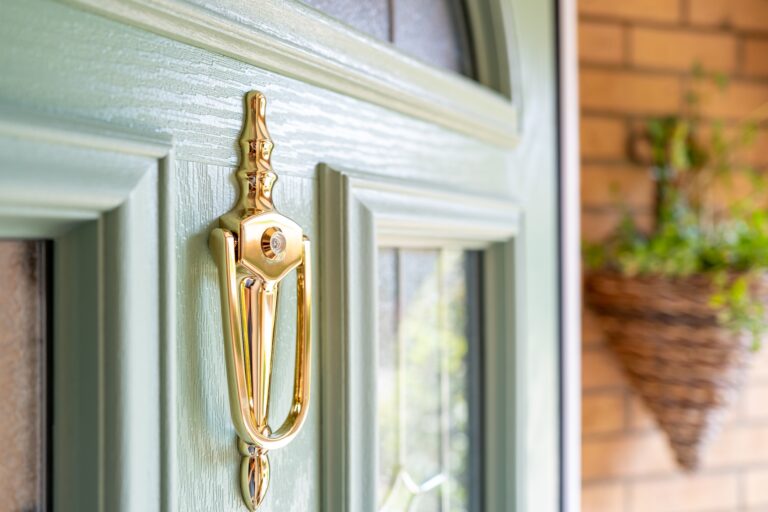
A composite front door is an entry door built from a blend of materials, typically a solid insulating foam core wrapped in wood, PVC, and a tough glass-reinforced plastic (GRP) skin, engineered to outperform traditional wood, steel, or uPVC doors on nearly every measure. Homeowners are drawn to composite doors because they deliver the warm look of timber without the upkeep, along with excellent insulation, strong security, and a lifespan that stretches for decades. This guide walks through the eight biggest benefits of a composite front door and explains exactly why they have become such a popular choice for modern homes.
- The core benefits: You will learn the eight advantages that make composite doors a standout entry option.
- Real performance data: You will see concrete figures on insulation, security, and energy savings.
- Why homeowners choose them: You will understand the practical reasons composite doors win people over.
What a Composite Front Door Is

A composite front door is defined by its layered, multi-material construction, which is what sets it apart from single-material doors. Understanding how it is built explains why it performs so well across the board.
How a Composite Door Is Built
A composite front door is manufactured by combining several materials, most often a high-density insulating foam core surrounded by an engineered timber or reinforced frame and finished with a durable glass-reinforced plastic outer skin. This layered design lets each material contribute its best quality, so the foam handles insulation, the frame provides rigidity, and the GRP skin resists impact and weather. The result is a door that is far more dimensionally stable than solid wood, meaning it resists the warping, swelling, and rotting that plague timber over time. That engineered stability is the foundation of nearly every benefit a composite door offers.
- Insulating core: A dense foam center delivers the door’s thermal performance.
- Reinforced frame: An engineered timber or composite frame adds strength and rigidity.
- GRP skin: A tough outer layer resists impact, scratches, and weather.
How It Differs From Wood, Steel, and uPVC Doors
A composite door differs from wood, steel, and uPVC by blending materials to eliminate the weaknesses each of those single-material doors carries on its own. Solid wood looks beautiful but warps, rots, and needs regular refinishing, while uPVC is low maintenance but less rigid and secure, and steel is strong but can dent and conduct heat. A composite door combines the security and strength of a solid core, the low maintenance of synthetic skins, and the insulation of a foam center in one unit. This is why composite is often described as offering the best qualities of every other door material without their main drawbacks.
- Versus wood: No warping, rotting, or repainting, but with a similar timber look.
- Versus uPVC: More rigid, more secure, and more thermally stable.
- Versus steel: Better insulation without the risk of denting or heat conduction.
8 Benefits of a Composite Front Door
Composite front doors have earned their popularity by excelling in the areas homeowners care about most, from comfort and cost to security and style. Below are the eight benefits that consistently win people over.
1. Outstanding Energy Efficiency
Energy efficiency is the headline benefit of a composite front door, driven by its dense insulating foam core that dramatically reduces heat transfer. The core keeps warm air inside during winter and blocks heat during summer, which eases the load on your heating and cooling system and lowers your bills. Some quality composite doors achieve U-values as low as 1.1, with thermal performance reported to be several times better than a traditional timber door. For a homeowner focused on comfort and utility costs, this insulation is often the single biggest reason to choose composite.
- Insulating core: The foam center sharply reduces heat loss through the door.
- Lower bills: Better insulation eases the strain on heating and cooling systems.
- Strong U-values: Quality composite doors reach ratings as low as 1.1.
2. Superior Security
Security is a major draw of composite front doors, thanks to their solid cores, reinforced frames, and multi-point locking systems. The dense construction resists being kicked in or dented, while the impact-resistant GRP skin holds up against attempts at forced entry. Multi-point locks engage the door to the frame at several points simultaneously, making it far harder to breach than a single deadbolt. For families prioritizing safety, this combination of a tough shell and robust locking hardware provides real peace of mind.
- Solid core: The dense build resists kicking, denting, and forced entry.
- Multi-point locking: Locks engage at several points for maximum resistance.
- Impact-resistant skin: The GRP outer layer withstands attempted break-ins.
3. Low Maintenance
Low maintenance is one of the most appreciated benefits, since a composite front door never needs the sanding, staining, or repainting that a wood door demands. The GRP skin holds its color and finish for years, requiring nothing more than an occasional wipe-down to stay looking new. Unlike timber, it will not warp, crack, or rot when exposed to sun, rain, and humidity, so its appearance stays consistent over time. This freedom from upkeep is a big part of why busy homeowners gravitate toward composite.
- No refinishing: The finish holds up without sanding, staining, or repainting.
- Easy cleaning: An occasional wipe-down keeps the door looking new.
- Weather resistant: The skin resists fading, cracking, and rot.
4. Long Lifespan and Durability
Durability sets composite front doors apart, because their engineered construction is built to last for decades with minimal care. The GRP skin resists scratches, dents, and impacts, while the stable core refuses to warp or swell as conditions change through the seasons. This resilience means the door keeps sealing tightly and operating smoothly far longer than a timber or uPVC door typically would. For homeowners who want a one-time upgrade rather than a recurring expense, that longevity is a compelling advantage.
- Impact resistant: The tough skin shrugs off scratches, dents, and knocks.
- Dimensionally stable: The core resists warping and swelling over the years.
- Decades of service: Composite doors far outlast typical timber and uPVC.
5. Weatherproof Performance
Weatherproofing is a standout benefit, as composite front doors are engineered to resist the warping, rotting, and swelling that weather inflicts on lesser materials. Tight, high-quality seals around the door minimize drafts and stop water from working its way inside, protecting both comfort and the surrounding structure. This makes composite an excellent fit for the temperature swings and sudden storms common across Central Texas. A door that holds its seal and shape through every season is one less thing a homeowner has to worry about.
- Resists the elements: No warping, rotting, or swelling from sun and rain.
- Tight seals: Quality weatherstripping keeps out drafts and moisture.
- Climate ready: Well suited to Central Texas heat and storms.
6. Noise Reduction
Noise reduction is a benefit homeowners often notice immediately, since the dense core and thick construction of a composite front door dampen outside sound. The same mass and insulation that block heat transfer also block airborne noise, creating a quieter, more peaceful interior. This is especially valuable for homes on busy streets or in dense neighborhoods where traffic and activity are constant. A calmer indoor environment is a welcome bonus that comes built into the door’s design.
- Dense construction: The solid core absorbs and blocks outside noise.
- Quieter interior: Insulation dampens traffic and neighborhood sound.
- Great for busy areas: Especially valuable near roads or in dense areas.
7. Style and Design Versatility
Style versatility is a benefit that lets homeowners get the exact look they want without compromising on performance. Composite front doors come in a wide range of colors, finishes, and panel designs, including realistic wood-grain textures and sleek contemporary smooth surfaces. Glazing options range from full glass panels to decorative and leaded designs, so the door can suit any architectural style. This ability to combine curb appeal with function is a key reason composite doors appeal to design-conscious buyers.
- Many finishes: Wood-grain and smooth options in a broad color palette.
- Glazing choices: From full glass to decorative and leaded panels.
- Suits any style: Designs to match traditional and modern homes alike.
8. Strong Return on Investment
Return on investment rounds out the benefits, because a new front door pays back much of its cost in resale value and energy savings. Exterior upgrades like entry door replacement consistently rank among the highest-return home improvements, adding curb appeal that buyers notice from the street. Combined with lower energy bills over the life of the door, a quality composite front door often justifies its price several times over. For homeowners thinking about both comfort and value, that payoff seals the decision.
- High resale value: Entry door upgrades rank among the top ROI improvements.
- Energy savings: Lower bills add up over the door’s long lifespan.
- Curb appeal: A fresh, attractive entrance boosts buyer interest.
Why Composite Doors Deliver on Energy Savings
The energy performance of a composite front door is not just marketing, since independent certification and real data back up the savings. Understanding the certification behind these doors helps homeowners buy with confidence.
The Certification and Savings Behind Composite Doors
The energy savings of a well-built composite door are validated by ENERGY STAR, the government-backed certification program run by the EPA and the U.S. Department of Energy. According to ENERGY STAR, installing certified windows, doors, and skylights can shrink energy bills by an average of up to 13% on heating and cooling costs nationwide compared to non-certified products (Source: ENERGY STAR – Residential Windows, Doors, & Skylights. Because a composite door’s insulating foam core and tight seals directly target the air leaks and heat transfer that drive up bills, choosing an ENERGY STAR certified composite door is a reliable way to capture those savings. The certification also gives homeowners an independent standard to compare against when shopping.
- Independent certification: ENERGY STAR is backed by the EPA and Department of Energy.
- Documented savings: Certified doors cut heating and cooling costs by up to 13%.
- Reliable benchmark: The label lets homeowners compare efficiency with confidence.
What To Look For When Choosing a Composite Door
Choosing the right composite front door means weighing insulation, security, and certification alongside style so you get the full benefit. Look for a door with a solid insulating foam core, a multi-point locking system, and an ENERGY STAR certification appropriate for your climate zone. Quality weather seals, a reinforced frame, and a warranty from a reputable manufacturer are also strong indicators of a door that will perform for decades. Matching these features to your home ensures you enjoy every advantage a composite door has to offer.
- Core and locks: Prioritize a foam core and a multi-point locking system.
- Certification: Choose an ENERGY STAR rating suited to your climate zone.
- Quality signals: Look for good seals, a solid frame, and a strong warranty.
Frequently Asked Questions
How Much Does a Composite Front Door Cost?
A composite front door typically costs between $500 and $1,500 for the door itself, with premium models featuring higher insulation, multi-point locking, or laminated glass running 15% to 40% more. Installation, framing adjustments, and hardware add to the total. Getting a written quote based on your specific opening is the best way to know your final cost.
How Long Does a Composite Front Door Last?
A quality composite front door can last for decades with minimal maintenance. Its engineered core resists warping and rot, while the GRP skin holds up against impacts and weather. This durability is a major reason composite doors are considered a long-term investment rather than a recurring expense.
Are Composite Doors More Secure Than Other Doors?
Yes, composite doors are among the most secure options available. Their solid cores, reinforced frames, and multi-point locking systems make them highly resistant to forced entry, while the impact-resistant skin resists denting and kicking. This combination provides significantly more protection than a standard single-lock door.
Do Composite Doors Need Painting or Refinishing?
No, composite doors never need painting, staining, or refinishing. The color and finish are built into the durable outer skin, which holds up for years with only occasional cleaning. This freedom from upkeep is one of the main reasons homeowners choose composite over wood.
Are Composite Front Doors Energy Efficient?
Yes, composite front doors are highly energy efficient thanks to their insulating foam core and tight seals. ENERGY STAR certified doors can reduce heating and cooling bills by an average of up to 13% compared to non-certified products. Choosing a certified composite door helps you capture those savings.
Is a Composite Door Better Than a uPVC Door?
For most homeowners, a composite door outperforms uPVC in strength, security, insulation, and lifespan. uPVC doors are low maintenance and less expensive, but they are less rigid and generally less secure. A composite door offers a more solid, durable, and thermally efficient entrance.
The Bottom Line on Composite Front Doors

A composite front door brings together the best qualities of every door material into one high-performing entrance, which is exactly why so many homeowners love them. From standout insulation and serious security to low maintenance, weatherproofing, and a lifespan measured in decades, the benefits stack up in a way that few other doors can match. When you factor in strong resale value and documented energy savings, a quality composite door proves itself a smart long-term choice for comfort, protection, and curb appeal. For homeowners in the Cedar Park and greater Austin area exploring their entry door options, Cedar Park Overhead Doors is a knowledgeable local resource for questions about doors and how different materials perform, so you can make the choice that best fits your home.