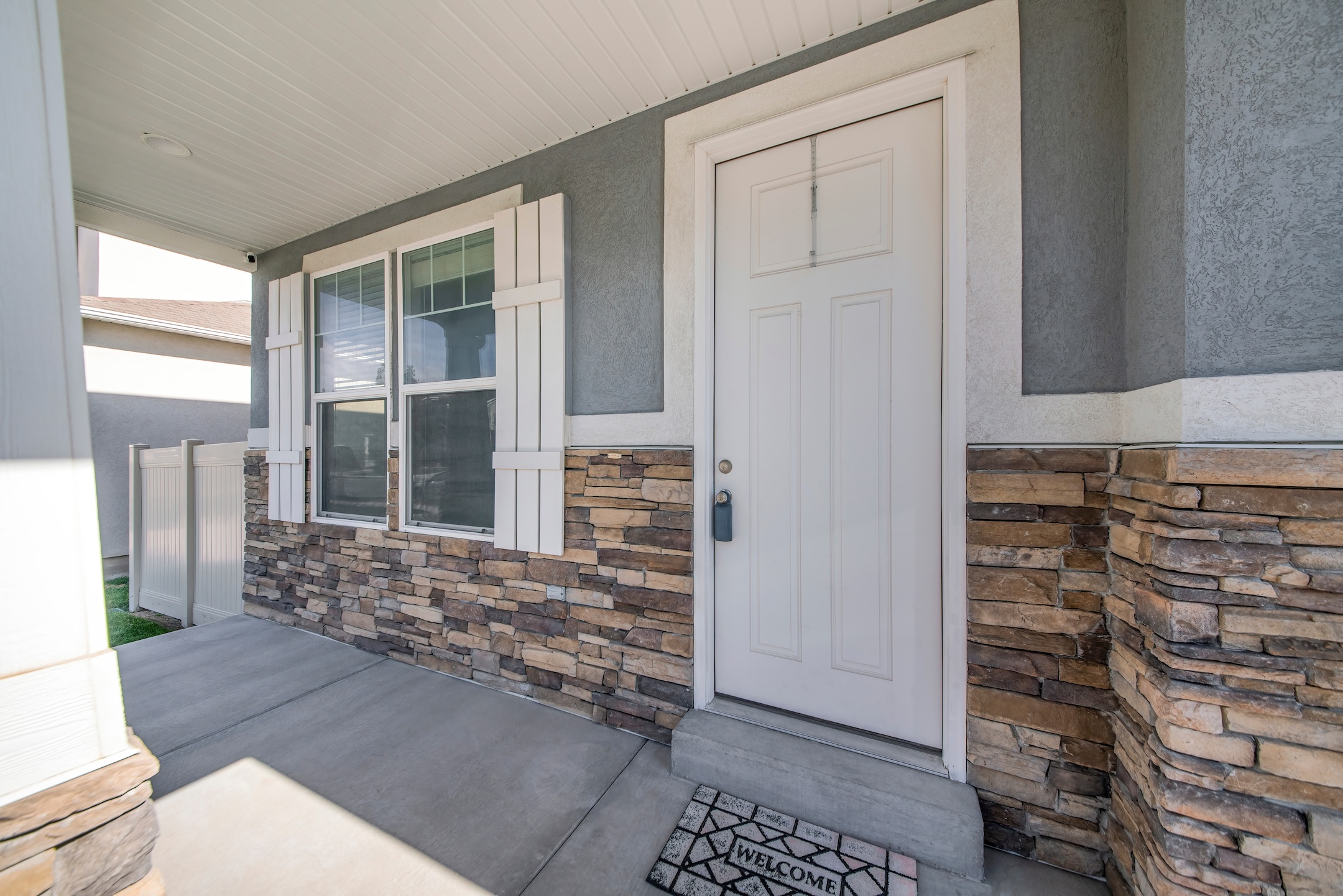
Stone veneer around front door is one of the most effective and affordable ways to transform a plain entrance into a warm, high-end focal point that boosts curb appeal the moment someone pulls up. Whether you choose lightweight manufactured stone or natural stone, framing the entryway in stone adds texture, character, and lasting value without the cost or weight of full masonry. This guide covers six design ideas for using stone around your front door, along with the practical installation tips that make the difference between a professional-looking result and a costly mistake.
- The design ideas: You will learn six popular ways to frame and accent a front door with stone veneer.
- Installation know-how: You will understand the key steps and materials that make a veneer installation last.
- Value and payoff: You will see why stone around an entryway is one of the smartest curb appeal upgrades.
What Stone Veneer Is and Why It Works Around a Front Door

Stone veneer is a thin layer of natural or manufactured stone applied to an exterior surface to create the look of solid masonry. Understanding the two main types helps you choose the right material for your entryway and budget.
Manufactured Versus Natural Stone Veneer
Manufactured stone veneer is a molded, lightweight product made from cement and aggregates, while natural stone veneer is quarried real stone cut into thin pieces. Manufactured veneer is far lighter and easier to cut, which makes installation faster, less labor intensive, and friendlier to a do-it-yourself approach around a doorway. Natural stone offers unmatched authenticity and longevity but weighs more, costs more, and often requires extra structural support. For most front door applications, manufactured veneer delivers the look homeowners want at a more accessible price, though natural stone remains the premium choice for those who want the real thing.
- Manufactured veneer: Lightweight, uniform, easy to cut, and budget friendly.
- Natural veneer: Authentic and durable but heavier and more expensive.
- Best for entryways: Manufactured veneer suits most door surrounds and DIY work.
Why the Entryway Is the Ideal Spot for Stone
The front entryway is the ideal place for stone veneer because it is where visitors form their first impression and where a focal accent has the greatest visual impact. Designers consistently recommend front-facing areas like entryways, porch columns, and foundation walls as the spots that create the strongest curb appeal without a full-home installation. Framing just the door with stone concentrates the drama and value where it matters most, so you get an outsized effect for a modest amount of material. This targeted approach is why so many homeowners start their stone upgrade at the front door.
- First impressions: The entryway sets the tone for the whole home.
- Maximum impact: A small stone accent here delivers outsized curb appeal.
- Cost efficient: Framing the door uses less material than full-facade stone.
6 Stone Veneer Ideas for Your Front Door
There are many ways to bring stone veneer to your entryway, from subtle accents to dramatic full surrounds. Below are six popular design ideas, each with the look it creates and where it works best.
1. A Full Stone Door Surround
A full stone door surround frames the entire doorway on both sides and across the top, creating a bold, cohesive focal point. This approach wraps the entry in stone like a picture frame, instantly elevating the entrance and giving it a substantial, custom-built feel. It works especially well on homes with a recessed or covered entry where the surround has depth to showcase the stone’s texture. Pre-sized veneer kits designed specifically for door surrounds make this one of the more achievable stone upgrades for a homeowner.
- The look: A framed, picture-window effect that anchors the entrance.
- Best for: Recessed or covered entries with depth to show off texture.
- Tip: Pre-sized surround kits simplify this popular design.
2. Stone Accent Columns or Pillars
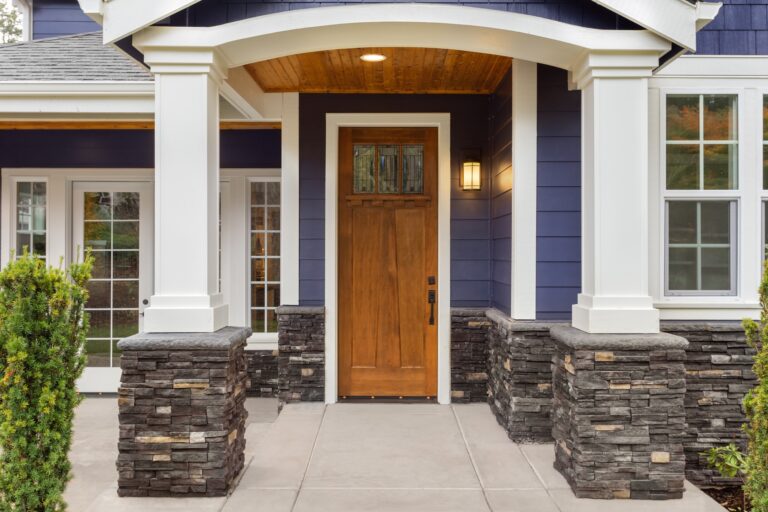
Stone accent columns flank the front door with stone-clad pillars that add height, symmetry, and architectural weight to the entrance. Wrapping existing porch posts or structural columns in veneer transforms plain supports into stately features that draw the eye upward. This idea pairs beautifully with a covered porch or portico and lends a craftsman or estate-style character to the home. Because columns are vertical and visible from a distance, they deliver strong curb appeal even with a relatively small amount of stone.
- The look: Stately, symmetrical pillars that frame the entry.
- Best for: Covered porches, porticos, and craftsman-style homes.
- Tip: Wrapping existing posts is easier than building new columns.
3. A Stone Wainscot Along the Entry Wall
A stone wainscot applies veneer to the lower portion of the wall around the entrance, mimicking a traditional foundation or base of stone. This half-wall treatment grounds the facade visually and creates a natural, layered look that ties the entry into the rest of the exterior. Designers often recommend cladding the bottom third of a wall, which is exactly the approach used in the most successful curb appeal upgrades. A wainscot works well when you want stone to feel like an integrated architectural element rather than a single accent.
- The look: A grounded, foundation-style band of stone at the base.
- Best for: Facades where you want stone to feel architectural and integrated.
- Tip: Cladding the bottom third balances impact and material cost.
4. A Stone Archway Over the Door
A stone archway outlines the top of the doorway with a curved or keystone-accented arch that adds old-world elegance and a sense of grandeur. This idea draws attention to the door itself and creates a welcoming, timeless entrance reminiscent of European and Tudor architecture. Adding a keystone at the peak of the arch is a classic touch that reinforces the handcrafted look. An archway pairs well with a full surround or columns for a complete, cohesive entry design.
- The look: An elegant, old-world arch that crowns the doorway.
- Best for: Tudor, Mediterranean, and European-inspired homes.
- Tip: A keystone accent enhances the handcrafted appearance.
5. Mixed Stone and Siding Contrast
Mixing stone veneer with your existing siding creates contrast and dimension by pairing the texture of stone against smoother siding or trim. This idea uses stone as a deliberate accent around the door while letting the surrounding material provide balance, which keeps the look modern and intentional rather than heavy. Choosing stone colors that coordinate with your existing exterior palette is key to making the contrast feel designed. This approach suits contemporary and transitional homes where a full stone facade would feel like too much.
- The look: Modern contrast between stone texture and smooth siding.
- Best for: Contemporary and transitional homes wanting a lighter touch.
- Tip: Coordinate stone tones with your existing exterior colors.
6. Stone-Framed Sidelights and Address Accent
Framing the sidelights beside the door and adding a stone address block extends the stone treatment into functional, eye-catching details. Cladding the narrow sections around sidelight windows ties the glass into the stone design, while a stone address block adds a custom, finished touch that improves both looks and wayfinding. These smaller accents let you introduce stone in a refined, deliberate way without committing to a large installation. They also work beautifully alongside any of the larger ideas above for a layered, cohesive entrance.
- The look: Refined stone details around sidelights and house numbers.
- Best for: Entries with sidelight windows or a desire for custom accents.
- Tip: Pair with a larger stone element for a layered design.
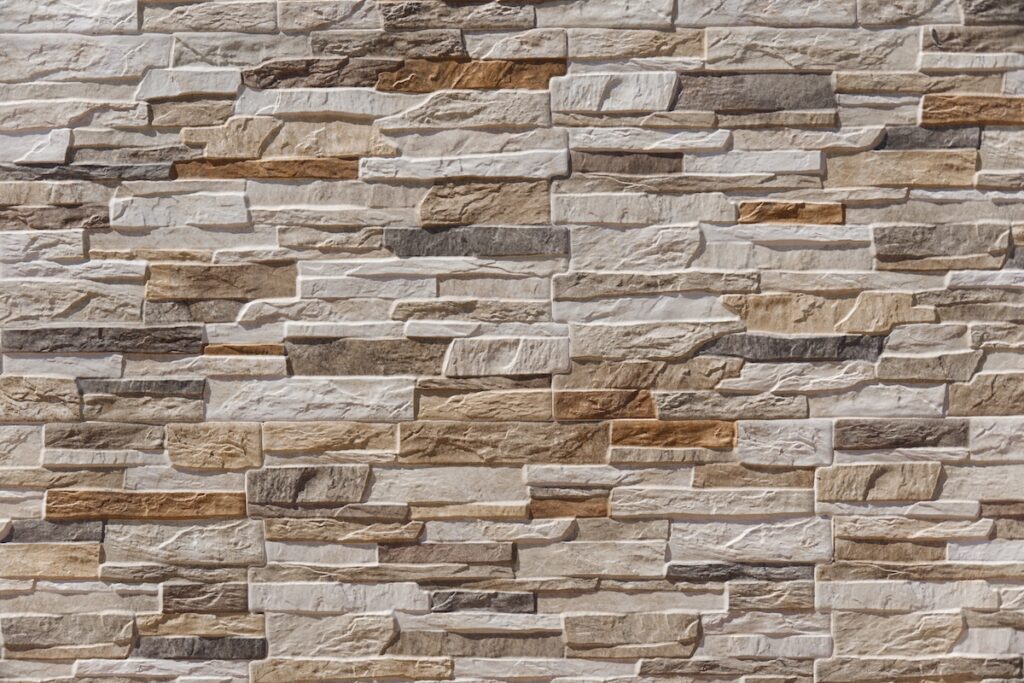
Installation Tips for Stone Veneer Around a Front Door
Installing stone veneer around a door is achievable for a skilled homeowner, but the details determine whether it lasts for decades or fails within a few years. These tips cover the essentials that protect your investment.
The Key Steps and Materials That Matter
A durable stone veneer installation depends on proper moisture protection, a solid substrate, and the right mortar and technique. The process starts with a water resistive barrier over the wall sheathing, followed by metal lath, a scratch coat of mortar, and then the veneer set in mortar with attention to spacing and grout joints. Manufactured stone veneer has consistently high resale value precisely because, when installed correctly, it performs for decades, and the 2025 Cost vs. Value Report ranked it the third-highest return of 28 improvements at 206% cost recouped, with the sample installation specifically including stone outlining the entry archway. Following the manufacturer’s installation guidelines and using the appropriate materials is what ensures that long-term durability.
- Moisture barrier: A water resistive barrier behind the lath prevents water damage.
- Proper substrate: Metal lath and a scratch coat give the veneer a solid bond.
- Follow guidelines: Manufacturer instructions ensure decades of performance.
Common Mistakes to Avoid
The most common stone veneer mistakes involve skipping moisture protection, poor mortar work, and neglecting proper flashing around the door. Failing to install a water resistive barrier or flashing where the stone meets the door frame invites water intrusion that can rot the wall behind the veneer. Inconsistent mortar coverage and sloppy grout joints undermine both the appearance and the bond, leading to loose or falling stones over time. Because the area around a door involves openings, trim, and weather exposure, this is a spot where professional installation often pays off for homeowners who are unsure.
- Skipping flashing: Missing flashing around the door leads to hidden water damage.
- Poor mortar work: Inconsistent coverage causes stones to loosen or fall.
- When to hire out: Door openings and flashing make this a good pro candidate.
Frequently Asked Questions
How Much Does Stone Veneer Around a Front Door Cost?
Stone veneer around a front door varies widely by material and coverage, but manufactured veneer is far more affordable than natural stone. A larger facade upgrade averages around $11,700 installed, while a smaller door surround using a pre-sized kit costs considerably less. The final price depends on the stone type, the area covered, and whether you hire a professional.
Is Manufactured Stone Veneer Worth It?
Yes, manufactured stone veneer is one of the highest-return home improvements available. The 2025 Cost vs. Value Report ranked it the third-best return of 28 improvements at 206% cost recouped. Beyond resale value, it delivers strong curb appeal and durability at a fraction of the cost and weight of natural stone.
Can I Install Stone Veneer Around My Door Myself?
A skilled do-it-yourselfer can install manufactured stone veneer around a door, especially using a pre-sized surround kit. That said, proper moisture barriers, flashing, and mortar work are critical, and mistakes can lead to water damage. If you are unsure about flashing around the door opening, hiring a professional is the safer choice.
Does Stone Veneer Need Maintenance?
Manufactured stone veneer requires little maintenance and resists weather, pests, and rot. Natural stone may need periodic sealing to prevent moisture infiltration or staining. Occasional cleaning and an inspection of the mortar joints are usually all that is needed to keep either type looking its best.
How Long Does Stone Veneer Last?
High-quality stone veneer is designed to last for decades when properly installed and maintained. Following manufacturer installation guidelines and using the correct materials, including moisture protection, is what ensures long-term durability. Poor installation, especially missing flashing or moisture barriers, is the main thing that shortens its life.
Will Stone Veneer Add Value to My Home?
Yes, stone veneer is proven to add resale value, largely through curb appeal. Curb appeal can account for a meaningful share of a home’s sale price, and stone around the entryway creates a strong first impression. The Cost vs. Value Report consistently ranks manufactured stone veneer among the top improvements for return on investment.
The Bottom Line on Stone Veneer Around Your Front Door

Framing your front door with stone veneer is one of the most rewarding curb appeal upgrades a homeowner can make, combining timeless style with a return on investment that few other improvements can match. Whether you opt for a full surround, accent columns, a wainscot, or refined sidelight details, the key to a lasting result is proper moisture protection, quality materials, and careful installation around the door opening. Taking the time to plan the design and follow manufacturer guidelines will reward you with an entrance that looks custom-built and holds its value for decades. For homeowners in the Cedar Park and greater Austin area looking to make the most of their home’s exterior, Cedar Park Overhead Doors is a knowledgeable local resource for questions about entrances and curb appeal, and thoughtful upgrades like these are always worth planning carefully before you begin.