Entry door repair covers a wide range of fixes, from swapping worn weatherstripping to correcting a door that sticks, sags, or no longer locks properly, and knowing what each issue involves helps you budget before you call anyone. Because a front door gets daily use and faces the weather year-round, its hardware, seals, and alignment wear down faster than almost any other door in the home. This guide breaks down the six most common entry door problems, what causes them, and the typical cost to fix each one in 2026.
- The common issues: You will learn the six problems that most often send homeowners looking for a repair.
- Real cost ranges: You will see typical 2026 price ranges for each fix so you can budget realistically.
- Repair or replace: You will understand when a simple repair is enough and when replacement makes more sense.
Why Entry Doors Need Repairs Over Time
Entry doors wear down because they endure constant use, weather exposure, and the settling of the home around them. Understanding the common causes helps you spot small problems before they turn into bigger ones.
The Main Causes of Entry Door Wear
Entry doors develop problems from a combination of daily use, weather exposure, and the natural shifting of a house over time. Every open and close cycle compresses seals and loosens hardware, while sun, rain, and humidity break down weatherstripping and can warp or swell the door itself. In older homes, decades of settling can leave frames out of plumb, which throws off alignment and causes sticking or gaps. Because the front door faces all of these forces at once, it typically needs attention more often than interior doors.
- Daily use: Constant opening and closing loosens hardware and compresses seals.
- Weather exposure: Sun, rain, and humidity degrade seals and can warp the door.
- Home settling: Shifting foundations leave frames out of plumb over the years.
When Repair Makes Sense Versus Replacement
Repair usually makes sense when the damage is limited to hardware, hinges, alignment, seals, or minor frame issues, while replacement is the better call for major structural damage. A door with a loose handle, a sticky latch, or worn weatherstripping is a straightforward repair that costs far less than a new unit. On the other hand, severe warping, extensive rot, or a door that is badly energy inefficient often justifies full replacement, since repeated repairs on a failing door stop being cost effective. Weighing the extent of the damage against the cost of a new door helps you make the smart choice.
- Repair it: Best for hardware, hinge, alignment, seal, or minor frame problems.
- Replace it: Better for major structural damage, severe warping, or extensive rot.
- Weigh the cost: Repeated fixes on a failing door rarely pay off long term.
6 Common Entry Door Issues and What They Cost in 2026
Most entry door problems fall into a handful of recurring categories, each with its own typical repair cost. Below are the six most common issues, what causes them, and the price range you can expect to pay in 2026.
1. Worn or Failing Weatherstripping
Worn weatherstripping is the single most common entry door issue, because a front door in daily use compresses its seals faster than any other door in the home. When the weatherstripping cracks, flattens, or peels away, you get drafts, water intrusion, and higher energy bills, and most entry door seals need replacement every 2 to 5 years. Replacing weatherstripping on a single door typically runs $60 to $200 depending on the material and door type, making it one of the most affordable and highest-value fixes. Fresh seals restore comfort and efficiency for a modest cost.
- Cause: Daily use, sun, and humidity break down the seals over a few years.
- Symptoms: Drafts, water intrusion, and rising energy bills.
- Typical cost: Roughly $60 to $200 per door depending on material.
2. A Sticking or Binding Door
A door that sticks, drags, or binds against the frame is a frequent complaint that usually traces to alignment or swelling. Humidity can swell a wood door, loose or sagging hinges can drop it out of position, and a settling frame can leave it rubbing at the top or side. The fix ranges from simple hinge adjustment and hardware tightening to planing the door or correcting the frame, so costs vary widely. Minor alignment and hinge work often falls in the $20 to $350 range depending on the severity and whether frame adjustment is needed.
- Cause: Humidity swelling, hinge sag, or a frame knocked out of plumb.
- Symptoms: The door drags, rubs, or is hard to open and close.
- Typical cost: About $20 to $350 depending on the extent of the fix.
3. Loose or Sagging Hinges
Loose or sagging hinges are a common source of alignment trouble, since the hinges carry the door’s full weight through every cycle. Over time, screws back out, hinges loosen, and the door drops on the hinge side, which pulls it out of square and away from its seal. Many cases are fixed by tightening or replacing screws and realigning the hinges, a quick and inexpensive repair. Hinge adjustment and hardware work commonly runs from around $20 for minor tightening up to a few hundred dollars if hinges are replaced and the door needs realignment.
- Cause: Screws loosen and hinges wear from carrying the door’s weight.
- Symptoms: The door sags, drops on one side, or no longer seals evenly.
- Typical cost: From about $20 for tightening up to a few hundred dollars.
4. Faulty Locks, Latches, or Handles
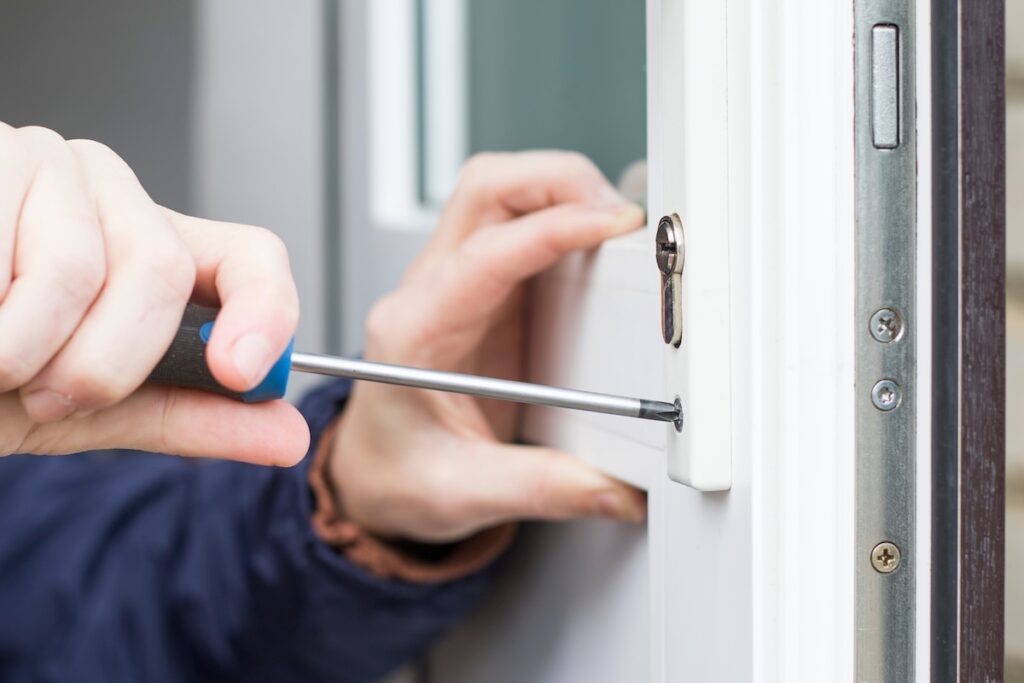
Faulty locks, latches, and handles are among the most common hardware repairs, and they matter for both security and daily convenience. A latch that will not catch, a deadbolt that sticks, or a strike plate that is misaligned can leave the door hard to secure or hard to open. Many of these issues are resolved by adjusting the strike plate, tightening the hardware, or replacing the lockset entirely. Basic lock and latch repairs are often inexpensive, while a quality replacement lockset or handleset adds the cost of the hardware itself, commonly ranging from modest to a few hundred dollars for premium sets.
- Cause: Wear, misaligned strike plates, or a failing lockset.
- Symptoms: The latch will not catch or the deadbolt sticks and jams.
- Typical cost: From minor adjustment up to a few hundred dollars for premium hardware.
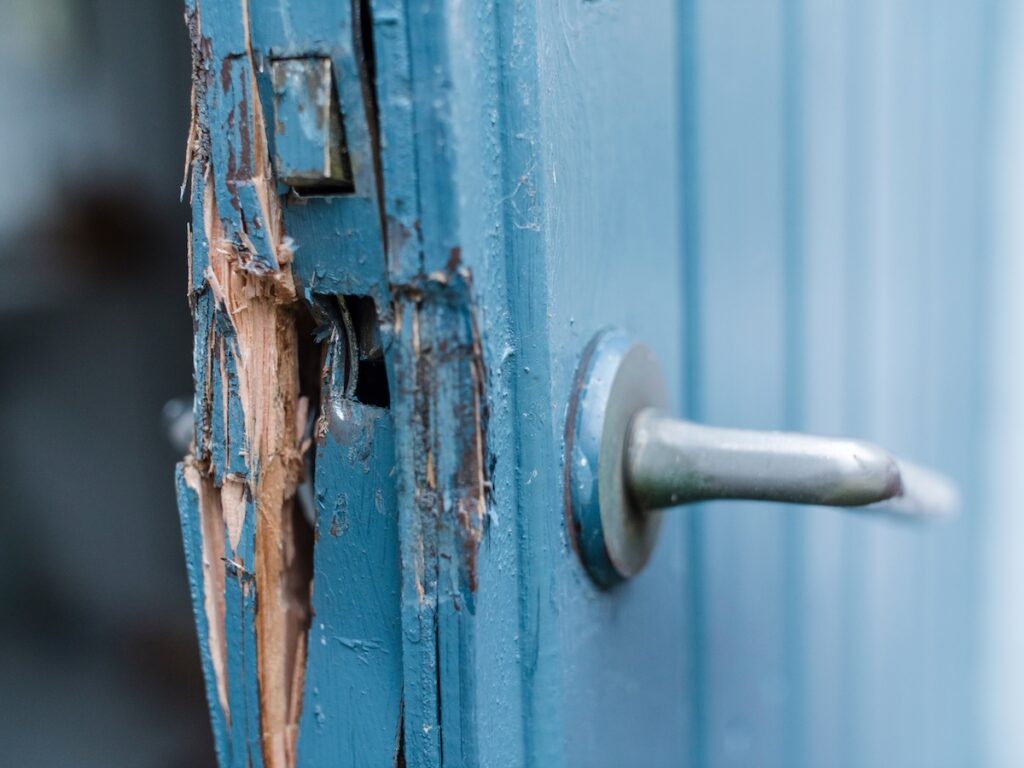
5. A Damaged or Rotting Door Frame
A damaged or rotting door frame is a more involved repair, and it is especially common at the bottom of the jamb where water collects. Moisture intrusion over years can cause wood frames to rot, warp, or crack, which compromises both the seal and the structural fit of the door. Frame repair ranges from patching and reinforcing a small area to replacing sections of the jamb or threshold. Door frame repair typically runs from around $250 up to $1,600 depending on the material, the extent of the rot, and the labor involved.
- Cause: Long-term moisture intrusion, often at the bottom of the jamb.
- Symptoms: Soft, cracked, or warped frame wood and a poor seal.
- Typical cost: Roughly $250 to $1,600 depending on severity.
6. Drafts and Poor Energy Sealing
Drafts and poor sealing are a widespread entry door issue that quietly raises energy bills even when the door looks fine. Gaps at the threshold, worn corner seals, and a door that no longer closes tightly against the stop all let conditioned air escape. Fixes include replacing the door sweep or bottom seal, adding fresh weatherstripping, and adjusting the strike plate so the door pulls in snugly. Sealing improvements are among the least expensive repairs, with door sweeps and bottom seals commonly costing $15 to $60 each plus any weatherstripping, and they deliver a fast return in comfort and savings.
- Cause: Threshold gaps, worn seals, and a door that closes loosely.
- Symptoms: Felt drafts, higher energy bills, and outside noise or dust.
- Typical cost: About $15 to $60 for a sweep or bottom seal, plus sealing.
Why Sealing and Repairs Pay Off
Keeping an entry door properly sealed and repaired does more than improve comfort, since it directly affects your energy bills and protects your home from moisture. A well-maintained door is one of the simplest ways to hold down utility costs.
The Energy Savings of a Well-Sealed Door
Sealing the gaps around an entry door pays for itself quickly because air leaks are a significant and often overlooked source of wasted energy. According to the EPA’s ENERGY STAR program, sealing air leaks around your home and adding insulation can provide up to 10% savings on your annual energy bills, and it specifically names installing weatherstripping on doors among the simple fixes that help. For an entry door, that means a low-cost weatherstripping or door sweep repair can deliver savings that outweigh the price of the fix within a season or two. Sealing improvements also protect flooring and framing from moisture damage.
- Lower bills: Sealing air leaks can meaningfully reduce heating and cooling costs.
- Fast payback: Inexpensive seal repairs often recover their cost within a season.
- Moisture protection: A tight seal keeps water away from flooring and framing.
How To Prevent Common Entry Door Problems
Preventing entry door problems is largely a matter of simple, regular upkeep that catches wear before it becomes a costly repair. Inspecting the weatherstripping annually, tightening loose hardware, and lubricating hinges and locks keeps the door operating smoothly and sealing tightly. Clearing debris from the threshold and addressing small gaps early prevents the moisture intrusion that leads to frame rot. A little routine attention extends the life of the door and spares you the larger bills that come from neglect.
- Inspect seals yearly: Check weatherstripping for cracks, gaps, and flattening.
- Tighten and lubricate: Keep hinges, locks, and hardware snug and moving freely.
- Address gaps early: Prompt sealing prevents rot and bigger repairs later.
Frequently Asked Questions
How Much Does Entry Door Repair Cost in 2026?
Entry door repair costs vary widely by issue, from around $20 for minor hinge tightening to $1,600 or more for extensive frame repair. Most common fixes, like weatherstripping replacement or a strike plate adjustment, fall in the $60 to $350 range. The final cost depends on the problem, materials, and labor involved.
Is It Cheaper To Repair or Replace an Entry Door?
Repair is almost always cheaper than replacement when the problem is limited to hardware, hinges, seals, or minor frame issues. Full entry door replacement typically runs $1,200 to $6,000 or more installed. Replacement makes more sense only when the door has major structural damage, severe warping, or extensive rot.
How Often Should Entry Door Weatherstripping Be Replaced?
Entry door weatherstripping typically needs replacement every 2 to 5 years, since a front door in daily use compresses its seals faster than other doors. Annual inspection helps you catch cracking, flattening, or peeling early. Replacing worn seals promptly keeps drafts and water out and holds down energy bills.
Why Does My Front Door Stick or Drag?
A front door usually sticks because of humidity swelling the door, loose or sagging hinges, or a frame that has shifted out of plumb as the house settles. The fix ranges from tightening hinges to adjusting the door or frame. Catching it early usually keeps the repair simple and inexpensive.
Can I Repair an Entry Door Myself?
Many entry door repairs are homeowner-friendly, including replacing weatherstripping, tightening hinges, and installing a new door sweep. More involved work like frame repair, correcting significant warping, or fixing a badly misaligned door often calls for a professional. Assess your comfort level and the extent of the damage before deciding.
What Are the Signs I Need a New Door Instead of a Repair?
Signs you may need a new door include severe warping, extensive rot in the door or frame, cracks that compromise structure, and persistent drafts that repairs no longer fix. If the door is old and repeated repairs keep adding up, replacement often becomes the smarter investment. Poor energy efficiency is another strong signal.
The Bottom Line on Entry Door Repair
Understanding the common entry door problems and their 2026 costs puts you in a stronger position to budget and make smart decisions about your home. Most issues, from worn weatherstripping to loose hinges and drafty thresholds, are affordable fixes that restore comfort, security, and energy efficiency for a fraction of the price of a full replacement. Knowing when a simple repair will do and when a door has reached the end of its life helps you avoid both overspending and repeated fixes on a failing unit. For homeowners in the Cedar Park and greater Austin area, Cedar Park Overhead Doors is a knowledgeable local resource for questions about doors and how they perform, and staying on top of routine maintenance is always the most cost-effective way to keep any door in your home working the way it should.