Garage door dent repair cost typically ranges from $100 to $300 for minor dents and climbs to $900 or more when panels need replacing, so knowing what to expect helps you budget before you call a technician. A dented door is one of the most common problems homeowners face, whether the cause is a bumper, a basketball, hail, or a windstorm, and the right fix depends on how severe the damage is and what your door is made of. This guide breaks down real 2026 pricing, the factors that drive the cost up or down, and how to decide between repairing a dent and replacing a panel or the whole door.
- Real cost ranges: You will see current 2026 prices for everything from minor dents to full panel replacement.
- What drives the price: You will learn the specific factors that raise or lower your repair bill.
- Repair or replace: You will understand when a simple fix makes sense and when replacement is smarter.
What Garage Door Dent Repair Costs in 2026

Garage door dent repair costs vary widely based on how bad the damage is and whether the panel can be reshaped or must be replaced. Understanding the typical price tiers helps you set realistic expectations.
The Cost by Damage Severity
Garage door dent repair costs break down by severity, from about $100 for minor dents up to $3,500 for a full door replacement in extreme cases. Minor dents that can be reshaped without replacing anything typically run $100 to $300, while moderate damage requiring panel repair falls around $250 to $400. Severe damage that forces a single panel replacement usually costs $300 to $900 per panel, and multiple damaged panels can run $600 to $1,500 or more. When three or more panels are affected or the panels are discontinued, a full door replacement at $700 to $3,500 often becomes the more sensible choice.
- Minor dents: Reshaping without replacement runs about $100 to $300.
- Single panel replacement: Severe damage to one panel costs roughly $300 to $900.
- Full door replacement: Extensive multi-panel damage can reach $700 to $3,500.
The Cost by Repair Method
The repair method a technician uses has a direct effect on the price, ranging from a nearly free do-it-yourself attempt to a welded structural patch. A basic do-it-yourself dent puller or heat method costs only $0 to $30 and works only on minor dents in the right conditions. Professional dent repair that reshapes a moderate dent typically runs $125 to $300 per panel, while a partial panel replacement, where the damaged section is cut out and a new patch welded in, costs about $300 to $600. Full panel replacement is the most involved method and carries the panel, labor, and hardware costs together.
- DIY methods: A dent puller or heat trick costs $0 to $30 for minor dents only.
- Professional reshaping: Fixing a moderate dent runs $125 to $300 per panel.
- Partial panel patch: Cutting and welding a new section costs $300 to $600.
5 Factors That Affect Your Garage Door Dent Repair Cost
Several variables determine where your repair lands within the typical price ranges, and understanding them helps you anticipate your bill. The factors below have the biggest influence on what you will pay for a dent fix.
1. Severity and Size of the Dent
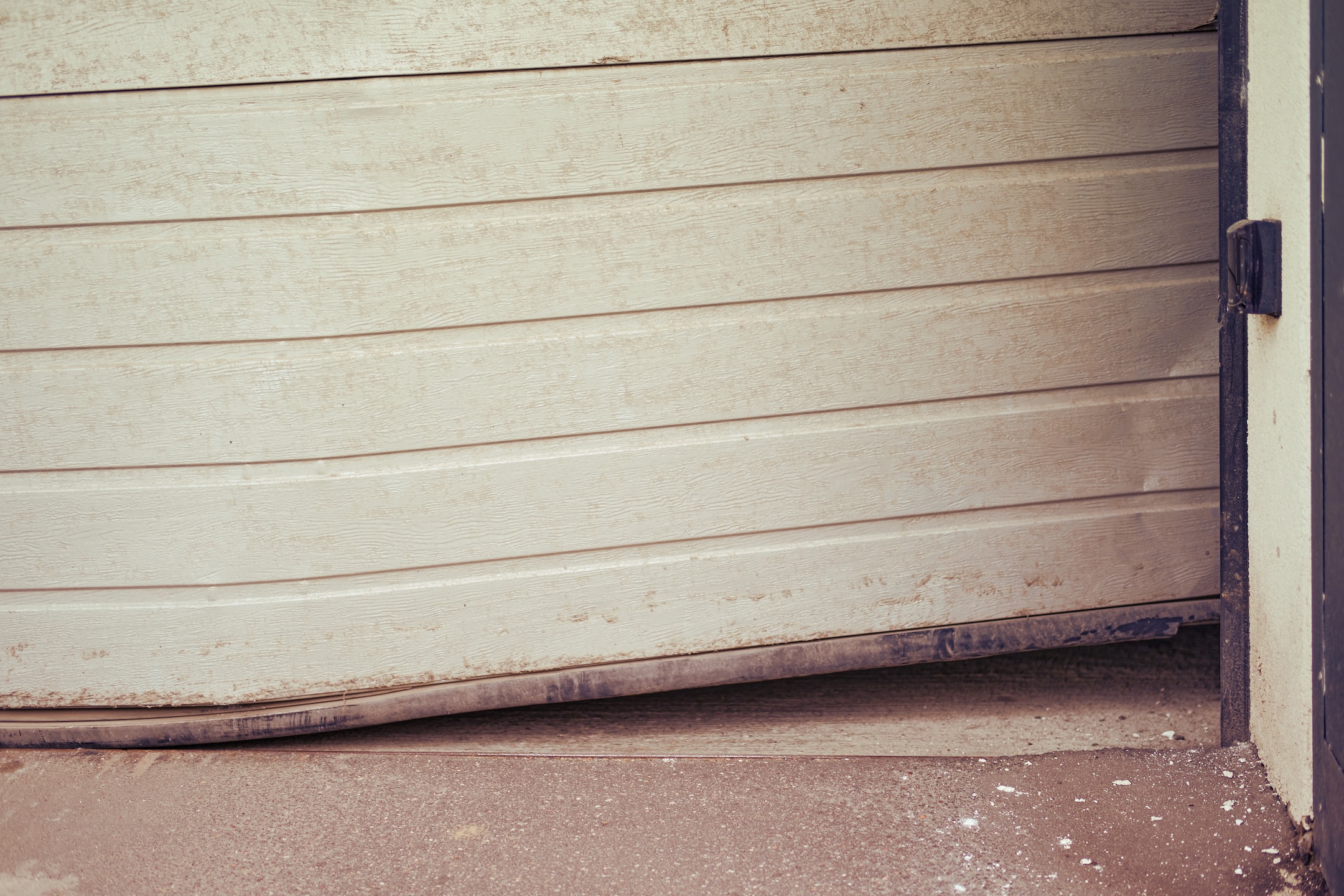
The severity and size of the dent are the biggest drivers of cost, because they determine whether the panel can be reshaped or must be replaced entirely. A small, shallow ding in an accessible spot can often be popped or heated back into shape for a modest fee, while a deep, wide, or creased dent may distort the panel beyond repair. Dents near the edges, hinges, or moving parts are also harder to fix and more likely to require replacement. The more the damage compromises the panel’s structure, the higher the cost climbs.
- Shallow dents: Small, accessible dings are the cheapest to reshape.
- Deep or creased dents: Severe distortion often forces panel replacement.
- Location matters: Damage near edges or hinges is harder and costlier to fix.
2. Door Material
Your door’s material significantly affects the repair cost, since each type requires different techniques, tools, and replacement parts. Steel is generally the least expensive to work with and can sometimes be reshaped, while aluminum dents easily and often needs replacement rather than repair. Wood panels are more labor-intensive because matching the stain or finish adds time and cost, and composite panels fall in between. When a panel must be replaced, the material drives a large share of the price, with steel panels costing far less than wood or custom sections.
- Steel: The most affordable to repair and replace, and sometimes reshapeable.
- Aluminum: Dents easily and frequently requires replacement over repair.
- Wood and composite: More labor and finish-matching raise the cost.
3. Single Versus Multiple Panels
The number of damaged panels has a major impact on your total, and it is often the deciding factor between repair and full replacement. Replacing a single panel is far cheaper than replacing several, and labor does not simply multiply because the technician is already on-site with the door secured. However, once two, three, or more panels are damaged, the combined cost can approach or exceed the price of a whole new door. This is exactly the point where comparing panel repair to full replacement becomes essential.
- Single panel: The most cost-effective scenario for isolated damage.
- Multiple panels: Combined costs can rival a full door replacement.
- Labor efficiency: One service visit covers multiple panels without doubling labor.
4. Panel Availability and Door Age
The age of your door and whether matching panels are still available can dramatically change your options and cost. On a newer door, a technician can usually order an exact matching panel quickly and affordably, keeping the repair simple. On an older door, the original panel may be discontinued, which means either a costly custom-ordered match or a mismatched panel that looks out of place. When a matching panel cannot be sourced, full door replacement often becomes the only practical path forward.
- Newer doors: Matching panels are easy to source and install.
- Older doors: Discontinued panels may require custom orders or replacement.
- Mismatch risk: An unavailable panel can push you toward a full new door.
5. Labor Rates and Service Timing
Local labor rates and when you schedule the work also shape the final bill. Professional labor for panel work commonly adds $200 to $500, and emergency or after-hours service calls carry premium rates above standard pricing. Minimum service fees can apply to small jobs, so a very minor dent repair may cost more than the raw materials suggest. Scheduling non-urgent repairs during normal business hours and bundling them with any other needed maintenance is the most cost-effective approach.
- Labor costs: Panel work typically adds $200 to $500 in labor.
- Emergency premiums: After-hours service raises the total above standard rates.
- Minimum fees: Small jobs may carry a minimum service charge.
Repairing a Dent Versus Replacing the Door
Deciding whether to repair a dent, replace a panel, or replace the whole door comes down to weighing the cost against the door’s age, condition, and resale value. This decision is where many homeowners can save the most money by choosing wisely.
When Repair Makes the Most Sense
Repairing a dent makes the most sense when the damage is minor to moderate, isolated to one panel, and the door is relatively new with panels still available. In these cases, reshaping the dent or swapping a single matching panel restores the door’s appearance and function for a fraction of the cost of full replacement. A newer door in otherwise good condition is well worth preserving, since the springs, tracks, opener, and remaining panels all have plenty of life left. Choosing a targeted repair keeps your money in your pocket while solving the problem.
- Minor, isolated damage: One dented panel on a sound door is ideal for repair.
- Newer door: Preserving a recent door protects your original investment.
- Panels available: An easy matching panel keeps the repair affordable.
When Replacement Is the Smarter Investment
Replacing the door becomes the smarter investment when multiple panels are damaged, the door is old or discontinued, or repeated repairs are adding up. Beyond the cost math, a new door delivers an exceptional financial return.
- Extensive damage: Multiple damaged panels often cost as much as a new door.
- Old or discontinued door: Unavailable panels make replacement more practical.
- Strong ROI: A new door returns 268% at resale, the top home improvement return.
Frequently Asked Questions
How Much Does It Cost To Fix a Dent in a Garage Door?
Fixing a dent in a garage door costs $100 to $300 for professional repair of minor to moderate dents. Do-it-yourself methods with a dent puller or heat run $0 to $30 but only work on small dents. Single panel replacement costs $300 to $900, and multiple panels or full door replacement can reach $700 to $3,500 or more.
Can a Dented Garage Door Be Repaired?
Yes, many dents can be repaired, especially minor to moderate ones on steel doors that can be reshaped without replacement. Whether a dent is fixable depends on its severity, location, and the door’s material. Deep, creased, or edge dents often require panel replacement instead of repair.
Is It Cheaper To Repair or Replace a Garage Door Panel?
Repairing a dent is cheaper than replacing a panel when the damage is minor and reshapeable. When a panel must be replaced, expect $300 to $900 for a single panel. If several panels are damaged, replacement costs can approach a full new door, so comparing both options is wise.
Can I Fix a Garage Door Dent Myself?
You can attempt minor dents yourself using a dent puller or a heat-and-cool method for $0 to $30 in tools. These methods work only on small, shallow dents in the right conditions. Deeper damage, aluminum panels, and anything near hinges or moving parts should be handled by a professional.
Does Insurance Cover Garage Door Dent Repair?
Homeowners insurance may cover garage door dent repair if the damage results from a covered event like a storm, hail, or certain accidents. Damage from normal wear or backing into the door yourself is typically not covered. Check your policy and deductible before filing, since minor repairs may cost less than your deductible.
How Long Does Garage Door Dent Repair Take?
Minor dent repair can often be completed in under an hour, while a single panel replacement typically takes a few hours. A partial panel patch that requires cutting and welding can take four to six hours. Custom-ordered panels for older doors add wait time before the work can begin.
Trust Cedar Park Overhead Doors for Your Garage Door Dent Repair
When a dent has your garage door looking rough, Cedar Park Overhead Doors is the local team homeowners trust to assess the damage honestly and recommend the most cost-effective fix. Our trained technicians can reshape minor dents, replace individual panels, and tell you clearly when a repair makes sense versus when a new door is the smarter investment, so you never overspend. As a Clopay Master Authorized Dealer, we source matching and replacement panels for doors from Raynor, Martin, Haas, Amarr, and Wayne Dalton, and we back every repair with solid warranties and flexible financing. Because dents from accidents and storms do not wait for business hours, we also offer 24/7 emergency garage door repair. If your door has a dent you want fixed right and priced fairly, reach out to Cedar Park Overhead Doors today for a free, no-obligation quote on your garage door dent repair.