A garage door keypad not working is one of the most common and most fixable problems homeowners run into, and in the majority of cases the culprit is something as simple as a dead battery or a keypad that has lost its programming. Before you assume the worst or call for service, a few quick checks will often have your keyless entry working again in minutes. This guide walks through the seven most common causes, how to fix each one, and when the problem points to something that needs a professional.
- The quick checks: You will learn the first two fixes that solve the large majority of keypad failures.
- The 7 causes: You will get a clear, in-order rundown of what goes wrong and how to fix it.
- When to call a pro: You will know the signs that point to a failing keypad or opener receiver.
Start With These Two Quick Checks

Before working through every possible cause, two simple tests will save you time and point you toward the real problem. Doing these first tells you whether the issue is the keypad or the opener itself.
Test the Opener With Another Control First
The fastest way to narrow down the problem is to confirm whether the opener itself is working using a different control. Press your remote or the wall-mounted button inside the garage, and if the door opens normally, you know the opener is fine and the problem is isolated to the keypad. If the door will not respond to any control, the issue is with the opener or its power, not the keypad, and troubleshooting the keypad will not help. This one test tells you exactly where to focus your effort before you touch the keypad.
- Use the wall button: If the door opens from inside, the opener works and the keypad is the issue.
- Try the remote: A working remote confirms the opener receiver is fine.
- No response at all: If nothing works, the problem is the opener, not the keypad.
Replace the Battery Before Anything Else
Replacing the keypad battery is the single most effective first step, because a weak or dead battery is by far the most common cause of a keypad failure. Even when the backlight still glows, low voltage can leave the keypad without enough power to transmit its signal to the opener. Most outdoor keypads use a 9-volt or 12-volt battery that is easy to access by sliding off the cover or removing a small screw. Swap in a fresh battery first, and only move on to other causes if that does not restore normal operation.
- Most common cause: A dead or weak battery accounts for roughly half of keypad failures.
- Backlight can mislead: A glowing keypad can still lack the power to send a signal.
- Easy swap: Most keypads use an accessible 9-volt or 12-volt battery.
7 Causes of a Garage Door Keypad Not Working
Once you have confirmed the opener works and replaced the battery, the following seven causes cover nearly every keypad problem. Work through them in order, and each includes the fix that resolves it.
1. Dead or Weak Keypad Battery
A dead or weak battery is the number one reason a garage door keypad stops working, responsible for roughly half of all keypad failures. As the battery drains, the keypad may light up and beep but lack the power to send a strong enough signal to reach the opener’s receiver. Cold weather makes this worse, since low temperatures reduce battery performance and can cause a marginal battery to fail entirely. The fix is simple: install a fresh, quality battery of the correct type before troubleshooting anything else.
- Symptom: Keypad lights up or beeps but the door does not respond.
- Cold-weather clue: Failures that appear in winter often trace to a weak battery.
- Fix: Replace with a fresh 9-volt or 12-volt battery as specified for your model.
2. Lost Programming or Sync With the Opener
A keypad that has lost its programming is the most common non-battery cause, and it often happens after a power outage, a battery change, or someone clearing the opener’s memory while adding a new remote. When this occurs, the keypad may light up and accept your code but never move the door, because it is no longer paired to the opener. The fix is to reprogram the keypad using the Learn button on the opener’s motor unit, then entering your PIN within the programming window. This restores the connection and usually solves the problem in a few minutes.
- Symptom: The keypad lights and beeps but the door will not open.
- Common triggers: Power outages, battery changes, or opener memory resets.
- Fix: Reprogram the keypad to the opener using the Learn button method.
3. Incorrect or Expired PIN
An incorrect, forgotten, or expired PIN is a frequent and easily overlooked cause of a keypad that will not work. Many keypads ship with a temporary PIN that needs to be changed, and if it expires or you enter the wrong code, the system may lock or simply refuse to open. It is also easy to enter a code too quickly, since keypads can miss rapid button presses. The fix is to re-enter your code slowly and deliberately, and if that fails, reset the keypad and program a fresh PIN following your model’s instructions.
- Symptom: The keypad responds but rejects your code.
- Common cause: An expired temporary PIN or a code entered too fast.
- Fix: Enter the code slowly, or reset and set a new PIN.
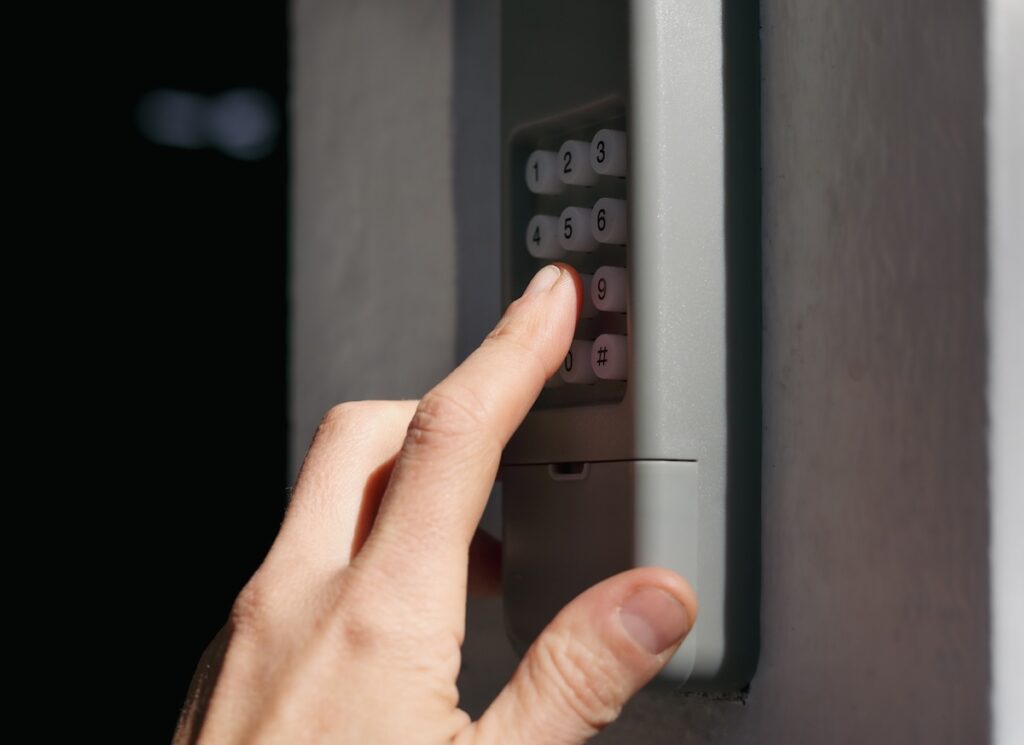
4. Worn or Sticking Buttons
Worn or sticking buttons are a physical failure that develops as an outdoor keypad ages and its most-used keys wear out. Years of sun, rain, and repeated pressing wear down the conductive membrane under the buttons, which is why the specific digits in your code tend to fail first. A keypad that requires certain keys to be pressed hard or multiple times has a worn membrane rather than a code or battery problem. There is no lasting repair for a worn membrane, so the fix is to replace the keypad with a new unit compatible with your opener.
- Symptom: Certain keys need hard or repeated presses to register.
- Cause: A worn conductive membrane under the most-used buttons.
- Fix: Replace the keypad, since a worn membrane cannot be repaired.
5. Weather and Moisture Damage
Weather and moisture damage is a common cause for outdoor keypads exposed to the elements year-round. Extreme cold, heat, and humidity can cause electrical failures, sticking buttons, and corrosion of the internal contacts, all of which interrupt normal operation. In Central Texas, intense summer heat and sudden storms put real stress on an exposed keypad over time. The fix is to inspect the unit for cracks, corrosion, or water intrusion, weatherproof or shelter it where possible, and replace a unit that has clearly been compromised by the elements.
- Symptom: Intermittent failures, sticking keys, or visible corrosion.
- Cause: Heat, cold, and moisture degrading the electronics and contacts.
- Fix: Shelter or weatherproof the keypad, and replace a damaged unit.
6. Signal Interference
Signal interference can block the keypad’s wireless signal from reaching the opener even when the keypad and battery are fine. Modern keypads transmit a radio-frequency signal to the opener, and nearby electronics can disrupt that signal path. Common sources include certain LED light bulbs in the garage, Wi-Fi routers, cordless phones, and other wireless devices operating close to the opener. The fix is to identify and remove or relocate the interference source, such as swapping a problem LED bulb for a compatible one, which often restores reliable operation.
- Symptom: The keypad works intermittently or only at close range.
- Common sources: LED bulbs, Wi-Fi routers, and other wireless electronics.
- Fix: Remove or relocate the interfering device, especially LED bulbs.
7. Blocked Photo-Eye Sensors
Blocked or misaligned photo-eye sensors can make it seem like the keypad has failed when the real problem is the door’s safety system. If the keypad triggers the opener but the door will not close, the opener may be detecting an obstruction, real or perceived, from the safety sensors near the bottom of the tracks. Dirty lenses, sun glare, or misalignment are common false triggers that stop the door from closing. The fix is to wipe the sensor lenses clean, confirm both show a steady indicator light, realign them if needed, and clear anything blocking the door’s path.
- Symptom: The keypad opens the door but it will not close.
- Cause: Dirty, misaligned, or glare-affected photo-eye sensors.
- Fix: Clean the lenses, realign the sensors, and clear the tracks.
Why Reprogramming Fixes So Many Keypad Problems
Reprogramming solves a large share of keypad failures because modern keypads rely on rolling-code security that pairs the keypad to the opener. Understanding this technology explains why sync is lost and why the Learn-button fix works.
How Rolling-Code Security Affects Your Keypad
Modern garage door keypads use rolling-code technology that generates a new, unique code with each use so the signal cannot be captured and replayed by an intruder. According to LiftMaster, its Security+ 2.0 technology safeguards garage access by sending a new code to your garage door opener with every click. Because the keypad and opener must stay synchronized within this secure code sequence, events like power outages, battery changes, or memory resets can break the pairing and stop the keypad from working. Reprogramming through the Learn button re-syncs the keypad into that sequence, which is why it resolves so many failures.
- New code each use: Rolling codes change every time to block signal capture.
- Sync required: The keypad and opener must stay paired within the code sequence.
- Reprogramming restores it: The Learn-button method re-syncs the pair.
When the Problem Is the Keypad or Opener Itself
Sometimes the issue runs deeper than a battery or programming glitch, and no amount of troubleshooting will bring the keypad back. If you have replaced the battery, reprogrammed the keypad, and ruled out interference and sensors but the keypad still fails, the internal electronics or the opener’s receiver may be failing. Most outdoor keypads last about 8 to 10 years before the buttons, housing, or contacts wear out, so an old, weathered unit is often simply at the end of its life. The fix is to replace an aged keypad, or to have a technician diagnose the opener’s receiver if a new keypad still will not pair.
- Symptom: Fresh battery and reprogramming both fail to help.
- Likely cause: A worn-out keypad or a failing opener receiver.
- Fix: Replace an aged keypad, or have the opener diagnosed by a pro.
Frequently Asked Questions
Why Did My Garage Door Keypad Suddenly Stop Working?
The most common reason a keypad suddenly stops working is a dead battery, which accounts for roughly half of all keypad failures. Other frequent causes include lost programming after a power outage, cold weather draining the battery, or signal interference. Start by replacing the battery, then reprogram the keypad if needed.
How Do I Reset My Garage Door Keypad?
To reset most keypads, you reprogram them to the opener using the Learn button on the motor unit, then enter a new PIN within about 30 seconds. The exact button sequence varies by brand, so check your model’s manual for LiftMaster, Chamberlain, or Genie. After resetting, test the new code to confirm it works.
What Battery Does a Garage Door Keypad Use?
Most garage door keypads use a 9-volt or 12-volt battery, depending on the brand and model. Check your existing battery or the owner’s manual to confirm the correct type. Using a fresh, quality battery helps prevent the low-voltage failures that cause many keypad problems.
Why Does My Keypad Light Up but Not Open the Door?
A keypad that lights up but will not open the door has usually lost its programming and needs to be re-paired with the opener. This often happens after a power outage or battery change. Reprogram the keypad using the Learn button method, and confirm the opener works with another control first.
How Long Do Garage Door Keypads Last?
Most outdoor garage door keypads last about 8 to 10 years before the buttons, housing, or internal contacts wear out. Indoor keypads tend to last longer because they are not exposed to weather. If your keypad is old and weathered and troubleshooting no longer helps, replacement is usually the best fix.
Can I Replace a Garage Door Keypad Myself?
Yes, replacing a keypad is a homeowner-friendly task, since it involves mounting the new unit and programming it to the opener. Choose a keypad compatible with your opener brand, and follow the Learn-button programming steps. If the new keypad still will not pair, the opener’s receiver may need professional attention.
Trust Cedar Park Overhead Doors When Your Keypad Needs More Than a Quick Fix

When your garage door keypad is still not working after a fresh battery and reprogramming, Cedar Park Overhead Doors is the local team homeowners rely on to diagnose and fix it fast. Our trained technicians pinpoint whether the problem is the keypad, the wiring, or the opener’s receiver, and we program and replace keypads for LiftMaster, Chamberlain, and other major brands. As a Clopay Master Authorized Dealer, we service doors and openers across belt drive, chain drive, jack-shaft, and MyQ smart configurations, and we pair them with quality doors from Raynor, Martin, Haas, Amarr, and Wayne Dalton, all backed by solid warranties and flexible financing. We also offer 24/7 emergency garage door repair for the times a keypad problem turns out to be something bigger. If your keyless entry has stopped working and simple fixes have not helped, reach out to Cedar Park Overhead Doors today for a free, no-obligation quote.