Knowing how to open a garage door manually is essential for any homeowner, because a power outage or a failed opener can leave your car trapped inside exactly when you need to get out. The good news is that every automatic garage door has a built-in emergency release that lets you disconnect the opener and operate the door by hand, and the process takes only a minute once you know the steps. This guide walks you through the six steps to safely open your door manually, along with the critical safety checks and how to reconnect the opener when power returns.
- The emergency release: You will learn where to find the red release cord and what it does.
- The 6 safe steps: You will get a clear, in-order walkthrough for opening the door by hand.
- Safety and reconnection: You will know the checks to make first and how to reconnect afterward.
What the Emergency Release Does

Every automatic garage door opener includes a manual emergency release that disconnects the door from the motor so you can move it by hand. Understanding this feature is the key to opening your door safely during any outage.
The Red Emergency Release Cord Explained
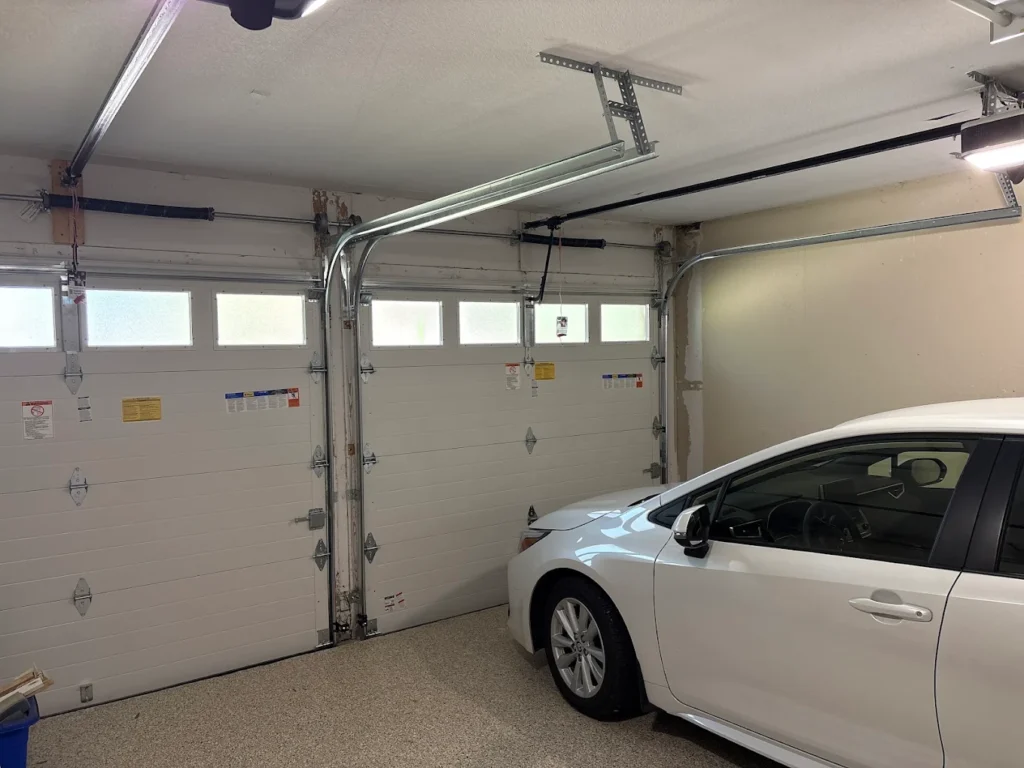
The emergency release is a red cord with a T-shaped handle that hangs from the trolley on the opener’s center rail, and pulling it disconnects the door from the motorized carriage. This cord is a standard, required feature on every residential opener, so if you have an automatic garage door, you have one, typically hanging 6 to 10 feet above the floor and centered above the door. On a trolley opener the cord hangs from the rail, while on a wall-mount or jackshaft opener the release hangs from the opener unit itself. Once pulled, the door moves freely on its springs and tracks, neither of which needs electricity to work.
- Red T-handle: The release cord is red and hangs from the trolley on the center rail.
- Standard feature: Every residential automatic opener includes one by requirement.
- Disconnects the motor: Pulling it lets the door move by hand on its springs.
Why the Door Still Works Without Power
A garage door opens and closes on a counterbalance spring system, not on the electric motor, which is why it still works during an outage once disconnected. The springs carry nearly the full weight of the door, so the opener only has to guide the motion rather than lift the entire load. When you pull the emergency release, you hand that control back to yourself, letting the balanced door glide up and down with modest effort. This is also why a door with healthy springs feels light by hand, while one with a broken spring becomes dangerously heavy.
- Spring-powered: The counterbalance springs, not the motor, carry the door’s weight.
- Motor only guides: The opener directs motion but does not do the heavy lifting.
- Balance matters: Healthy springs make the door light and safe to lift by hand.
6 Steps To Open Your Garage Door Manually
Opening your garage door by hand is straightforward when you follow the steps in order and put safety first. Work through these six steps, and stop immediately if anything looks damaged or the door feels unusually heavy.
1. Inspect the Springs and Hardware First
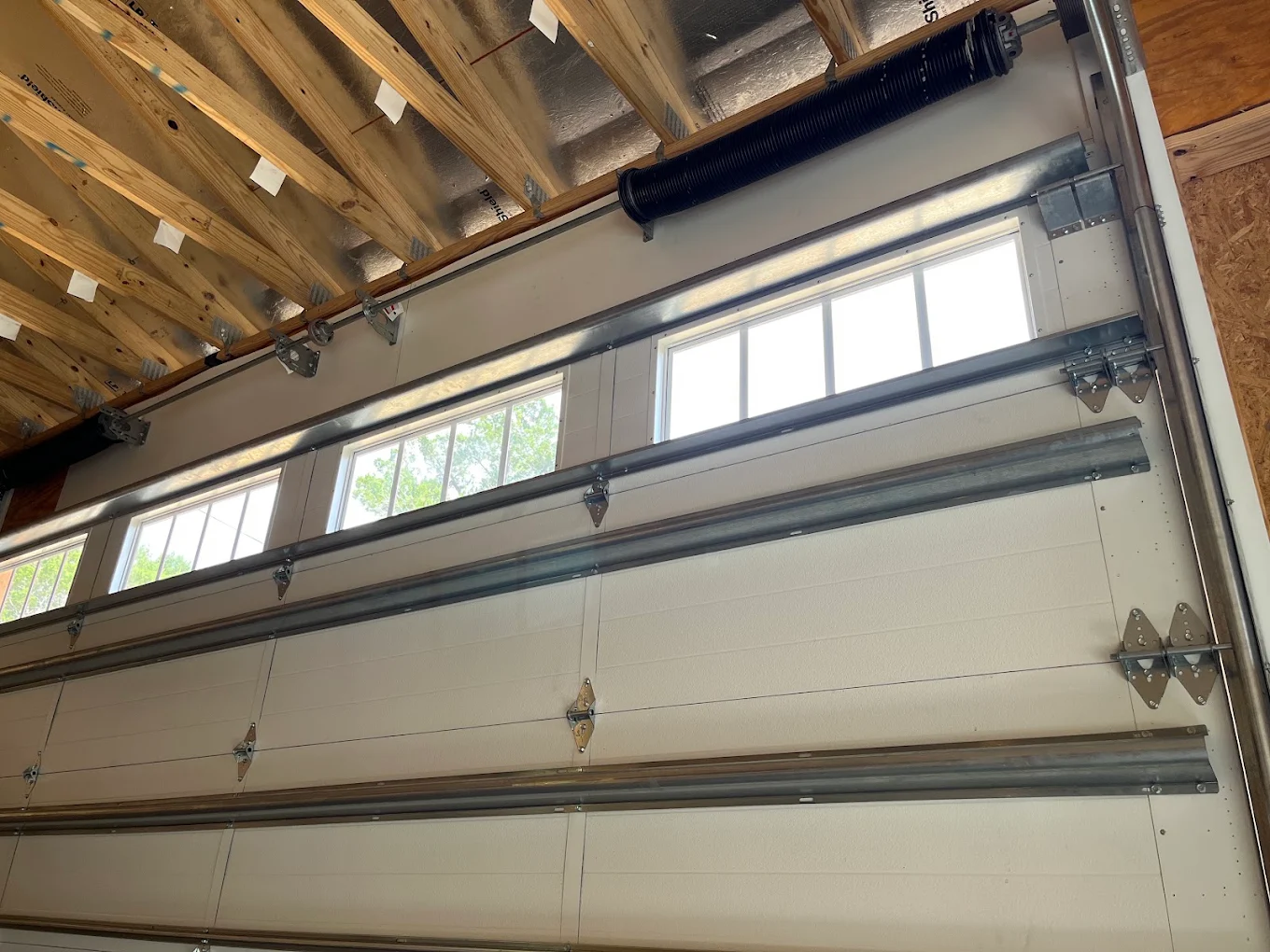
Before touching the release, take a moment to inspect the door’s springs, cables, and hardware for any sign of damage. Look at the torsion spring above the door or the extension springs along the side tracks for a visible gap in the coils, and check the cables for fraying or slack. If you heard a loud bang earlier, see a broken spring, or the door looks crooked in the tracks, stop and do not attempt to open it by hand. A door with a failed spring can be extremely heavy and dangerous, and it should be left to a professional.
- Check the springs: Look for gaps in the coils that signal a broken spring.
- Inspect the cables: Fraying, slack, or loose cables mean you should stop.
- Watch for warning signs: A crooked door or a remembered loud bang means call a pro.
2. Make Sure the Door Is Fully Closed
Whenever possible, pull the emergency release only when the door is in the fully closed position, because releasing a partially open door can cause it to drop suddenly. If your door is stuck partway open, be extremely cautious, since gravity and uneven spring tension can make it move unexpectedly the moment you disconnect the opener. A closed door sits in its most stable position with the springs holding it evenly, making the release safe to pull. If the door is open and you are unsure about the springs, wait for assistance rather than risk a sudden drop.
- Close it first: A fully closed door is the safest position to disconnect the opener.
- Avoid mid-travel release: Releasing a partially open door risks a sudden drop.
- Wait if unsure: Get help before releasing an open door with questionable springs.
3. Disconnect the Opener Power
Unplug the opener from the ceiling outlet before or after releasing the door so it cannot suddenly re-engage when power is restored. If the electricity comes back while the door is disconnected, an opener left plugged in could try to operate and damage the motor or the carriage. Disconnecting the power also removes any risk of the door moving unexpectedly under motor control while you are working. If you cannot safely reach the outlet, you can still proceed, but plan to unplug it before restoring power later.
- Unplug the opener: Prevents the motor from re-engaging when power returns.
- Protects the motor: Avoids damage from the opener trying to run while disconnected.
- Removes surprise movement: Ensures the door only moves when you move it.
4. Pull the Emergency Release Cord
Grip the red release handle and pull it firmly and steadily to disengage the door from the trolley, listening for a click that confirms it has released. On most openers you pull straight down, though on some older LiftMaster and Chamberlain models you pull the cord toward the door at an angle. You may need a stepladder to reach the handle depending on your ceiling height, so use one safely rather than jumping for it. Once you hear or feel the click, the door is disconnected from the motor and ready to lift by hand.
- Pull firmly: A steady pull disengages the trolley with an audible click.
- Know the direction: Straight down on most openers, toward the door on some older models.
- Use a ladder safely: Reach the handle with a stepladder rather than jumping.
5. Lift the Door Straight Up
Grip the door at the bottom center with both hands and lift straight up smoothly and evenly until it is fully open. A properly balanced door with healthy springs should feel manageable and rise with modest effort, stopping and staying in place once fully open. If the door feels unusually heavy, refuses to stay open, or drops when you pause, stop immediately, as this signals a spring problem that needs professional attention. Never force a door that resists, and keep your hands away from section joints and hinges where fingers can be pinched.
- Lift from the center: Use both hands at the bottom center for even, controlled lifting.
- Expect light effort: A balanced door rises easily and holds its open position.
- Stop if heavy: Unusual weight or dropping means a spring issue and a call to a pro.
6. Secure the Door Open Before Driving Through
Make sure the door is fully open and stable before you drive your vehicle underneath it. If the door does not reliably stay up on its own, prop it with a sturdy piece of wood or clamp locking pliers onto the track just below a roller so it cannot fall. Never drive under a manually opened door that could slide down, since a falling door can cause serious injury and damage your vehicle. Once you are through, you can lower the door by hand and, if it has a slide lock, engage it to keep the disconnected door secured.
- Confirm it stays up: Only drive through once the door holds fully open.
- Prop if needed: Use wood or track clamps to prevent an unstable door from falling.
- Secure when closed: Engage the manual slide lock, since the opener is disconnected.
Safety and Reconnecting the Opener
Manually operating your garage door safely means respecting the powerful spring system and knowing how to restore normal operation once power returns. These final points protect both you and your equipment.
Respect the Spring System
The single most important safety rule is to never operate or manually lift a door with a broken or suspected-failing spring, because the springs store enormous mechanical energy. This is not just advice but is built into industry standards, as ANSI/DASMA 103, the American National Standard for garage door counterbalance systems, requires that spring components under tension be restrained and marked with red fasteners and warning labels telling users not to remove them. Those red parts are a signal that the component is under dangerous tension and should only be serviced by a trained technician. When in doubt about your springs or cables, stop and call a professional rather than risk serious injury.
- Never touch red parts: Red fasteners mark components under dangerous spring tension.
- Do not lift a broken-spring door: A failed spring makes the door extremely heavy.
- Call a pro when unsure: Spring and cable work is never a safe do-it-yourself task.
How To Reconnect the Opener After Power Returns
Once electricity is restored, you can reconnect the door to the opener so it operates normally again. With the door fully closed, pull the emergency release cord back toward the opener motor until you feel or hear it click into the re-engage position, then plug the opener back in. Press the wall button or remote once, and the trolley will slide along the rail until it snaps back onto the carriage, restoring motorized control. Finally, run the door through a full open-and-close cycle to confirm everything operates smoothly and the safety features work correctly.
- Re-engage the lever: Pull the cord toward the motor until it clicks into place.
- Restore power and test: Plug in the opener and press the button to reconnect the trolley.
- Run a full cycle: Open and close once to confirm smooth, safe operation.
Frequently Asked Questions
Can I Open My Garage Door if the Power Is Out?
Yes, every garage door with an automatic opener has an emergency release cord that disconnects the door from the motor so you can open it by hand. The door runs on springs and tracks, which do not need electricity to move. Just make sure the springs are intact before lifting.
Where Is the Emergency Release Cord Located?
The emergency release is a red cord with a T-shaped handle that hangs from the trolley on the opener’s center rail, usually 6 to 10 feet above the floor and centered above the door. On wall-mount or jackshaft openers, it hangs from the opener unit itself. Use a flashlight to spot it in a dark garage.
Is It Safe To Pull the Emergency Release?
It is safe to pull the emergency release when the door is fully closed and the springs are in good condition. Never pull it when the door is partially open or when you suspect a broken spring, as the door can drop suddenly. When in doubt, wait for a professional.
Why Is My Garage Door So Heavy To Lift Manually?
A garage door that feels extremely heavy by hand almost always has a broken or weakened spring. The springs carry the door’s weight, so when one fails the full load falls on you. Stop lifting immediately and call a technician, as operating a door in this condition is dangerous.
How Do I Reconnect My Garage Door Opener?
With the door fully closed, pull the emergency release cord toward the opener motor until it clicks into the re-engage position, then restore power. Press the wall button or remote, and the trolley will slide back and snap onto the carriage. Run a full open-and-close cycle to confirm it works.
Can I Open My Garage Door Manually From the Outside?
Yes, if your garage has no other entrance, an exterior emergency release kit with a keyed lock near the top center of the door lets you pull the release cable from outside. Turn the key, pull out the lock tumbler to release the cable, then lift the door by hand. Not all doors have this kit, so check yours before an emergency.
Trust Cedar Park Overhead Doors When Your Door Won’t Cooperate
When manually opening your garage door reveals a bigger problem, or you simply want the peace of mind of a door that works reliably, Cedar Park Overhead Doors is the local team homeowners count on. Our trained technicians safely diagnose and repair the springs, cables, and openers that make manual operation necessary in the first place, and we handle the high-tension spring work that should never be a do-it-yourself task. As a Clopay Master Authorized Dealer, we service doors and openers from Raynor, Martin, Haas, Amarr, and Wayne Dalton across belt drive, chain drive, jack-shaft, and MyQ smart configurations, all backed by solid warranties and flexible financing. Because a stuck or broken door never happens at a convenient time, we also provide 24/7 emergency garage door repair. If your door is hard to lift, stuck, or showing signs of a spring or opener problem, reach out to Cedar Park Overhead Doors today for a free, no-obligation quote.